GT America

Family overview
- Compressed
- Ultra Light Italic
- Thin Italic
- Light Italic
- Regular Italic
- Medium Italic
- Bold Italic
- Black Italic
- Condensed
- Ultra Light Italic
- Thin Italic
- Light Italic
- Regular Italic
- Medium Italic
- Bold Italic
- Black Italic
- Standard
- Ultra Light Italic
- Thin Italic
- Light Italic
- Regular Italic
- Medium Italic
- Bold Italic
- Black Italic
- Extended
- Ultra Light Italic
- Thin Italic
- Light Italic
- Regular Italic
- Medium Italic
- Bold Italic
- Black Italic
- Expanded
- Mono
- Ultra Light Italic
- Thin Italic
- Light Italic
- Regular Italic
- Medium Italic
- Bold Italic
- Black Italic
Subfamilies
- Standard Ultra LightGoing in one more round when you don’t think you can – that’s what makes all the difference in your life.
- Standard Ultra Light ItalicI say break the rules, not the law, but break the rules.
- Standard ThinDenver, Colorado, 682’545, 153.0 sq mi, 39.7618°N 104.8806°W
- Standard Thin ItalicJohn Quincy Adams, July 11, 1767, Braintree, Massachusetts, March 4, 1825 – March 4, 1829
- Standard LightMartin Van Buren, December 5, 1782, Kinderhook, New York, March 4, 1837 – March 4, 1841
- Standard Light ItalicJames A. Garfield, November 19, 1831, Moreland Hills, Ohio, March 4, 1881 – September 19, 1881
- Standard RegularThe difference between a goal and a dream is a deadline.
- Standard Regular ItalicGrover Cleveland, March 18, 1837, Caldwell, New Jersey, March 4, 1885 – March 4, 1889
- Standard MediumBarack Obama, August 4, 1961, Honolulu, Hawaii, Assumed office January 20, 2009
- Standard Medium ItalicSuccessful people are always looking for opportunities to help others. Unsuccessful people are always asking, “What’s in it for me?”
- Standard BoldRichard M. Nixon, January 9, 1913, Yorba Linda, California, January 20, 1969 – August 9, 1974
- Standard Bold ItalicPhiladelphia, Pennsylvania, 1’567’442, 134.1 sq mi, 40.0094°N 75.1333°W
- Standard BlackHerbert Hoover, August 10, 1874, West Branch, Iowa, March 4, 1929 – March 4, 1933
- Standard Black ItalicJames Madison, March 16, 1751, Port Conway, Virginia, March 4, 1809 – March 4, 1817
- Settings
Typeface information
GT America is the missing bridge between 19th century American Gothics and 20th century European Neo-Grotesk typefaces. It uses the best design features from both traditions in the widths and weights where they function optimally.
- Designed by Noël Leu, with Seb McLauchlan. Script extensions by Grilli Type with Tania Chacana. Consulting by Maria Doreuli (Cyrillics), Vassilis Georgiou (Greek), Donny Trương (Vietnamese).
- Released in 2016
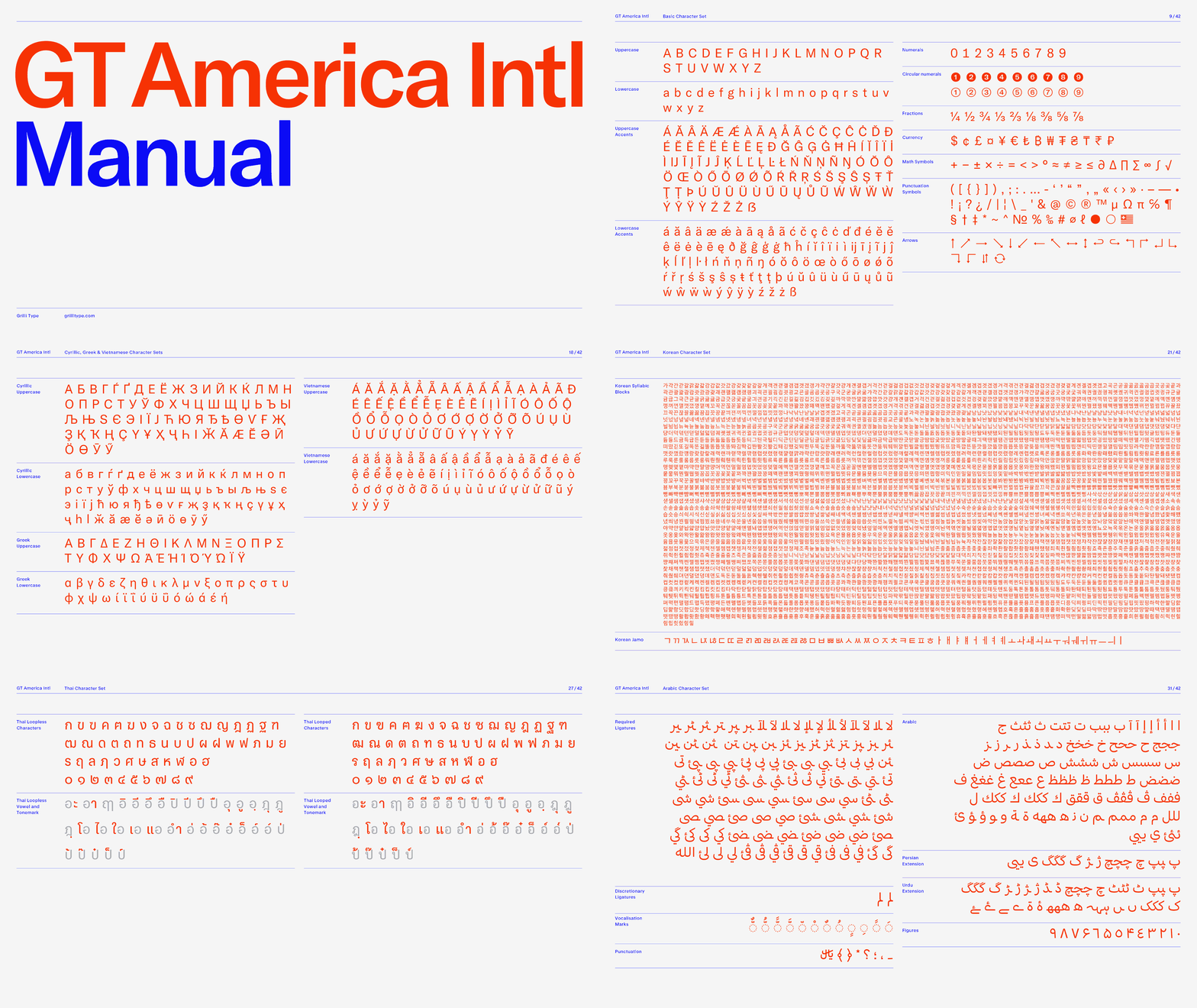
- Available in 84 styles
- GT America is available for customization and language extensions
- Download the free trial fonts
Typeface features
OpenType features enable smart typography. You can use these features in most Desktop applications, on the web, and in your mobile apps. Each typeface contains different features. Below are the most important features included in GT America’s fonts:
- SS01
- Alternate g
Schönegg
- SS02
- Alternate one
1776/1848
- SS05
- Round Dots
Österreich?
- ONUM
- Oldstyle numerals
0123456789
- CASE
- Case sensitive forms
¿¡WHAT?!
Typeface Minisite
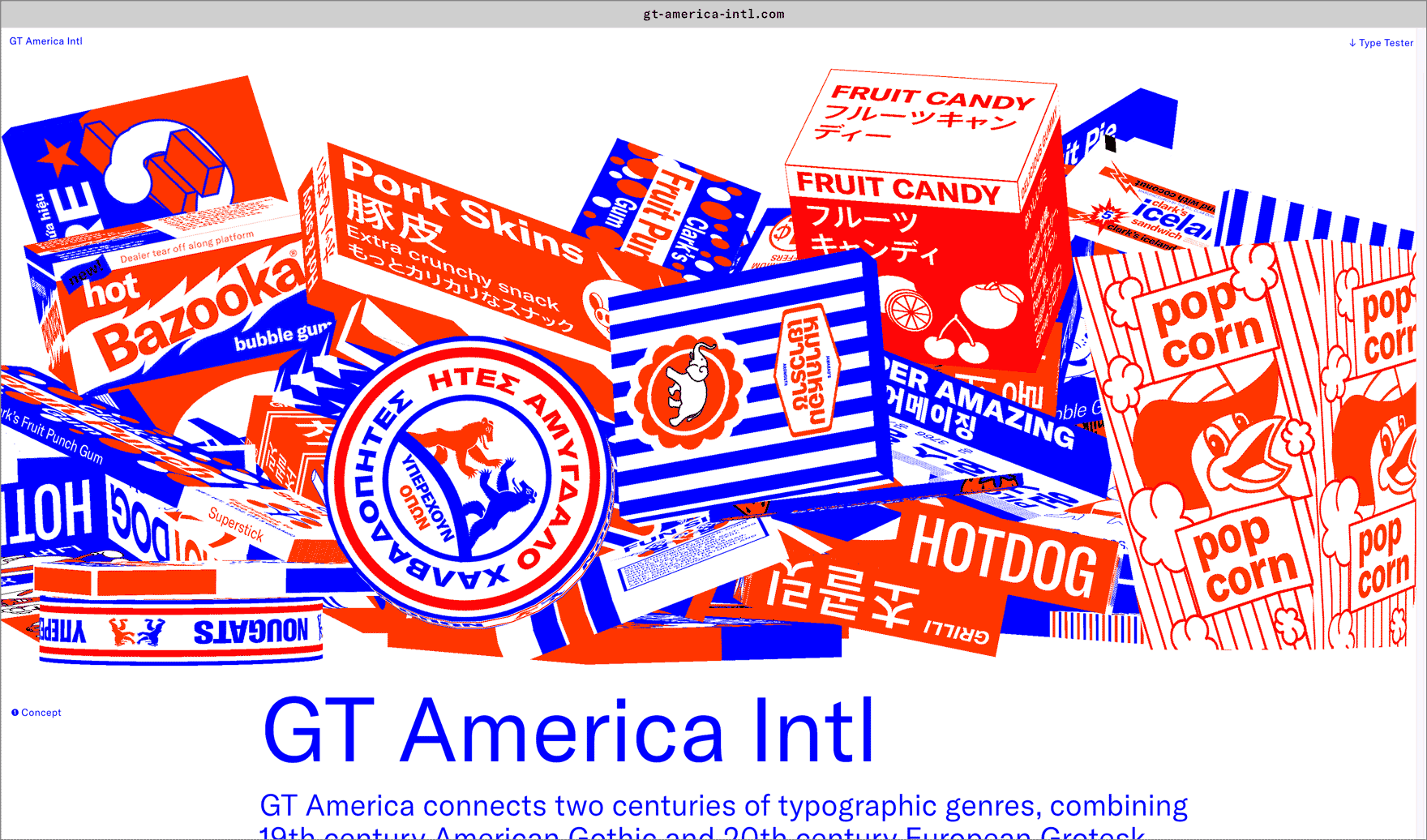
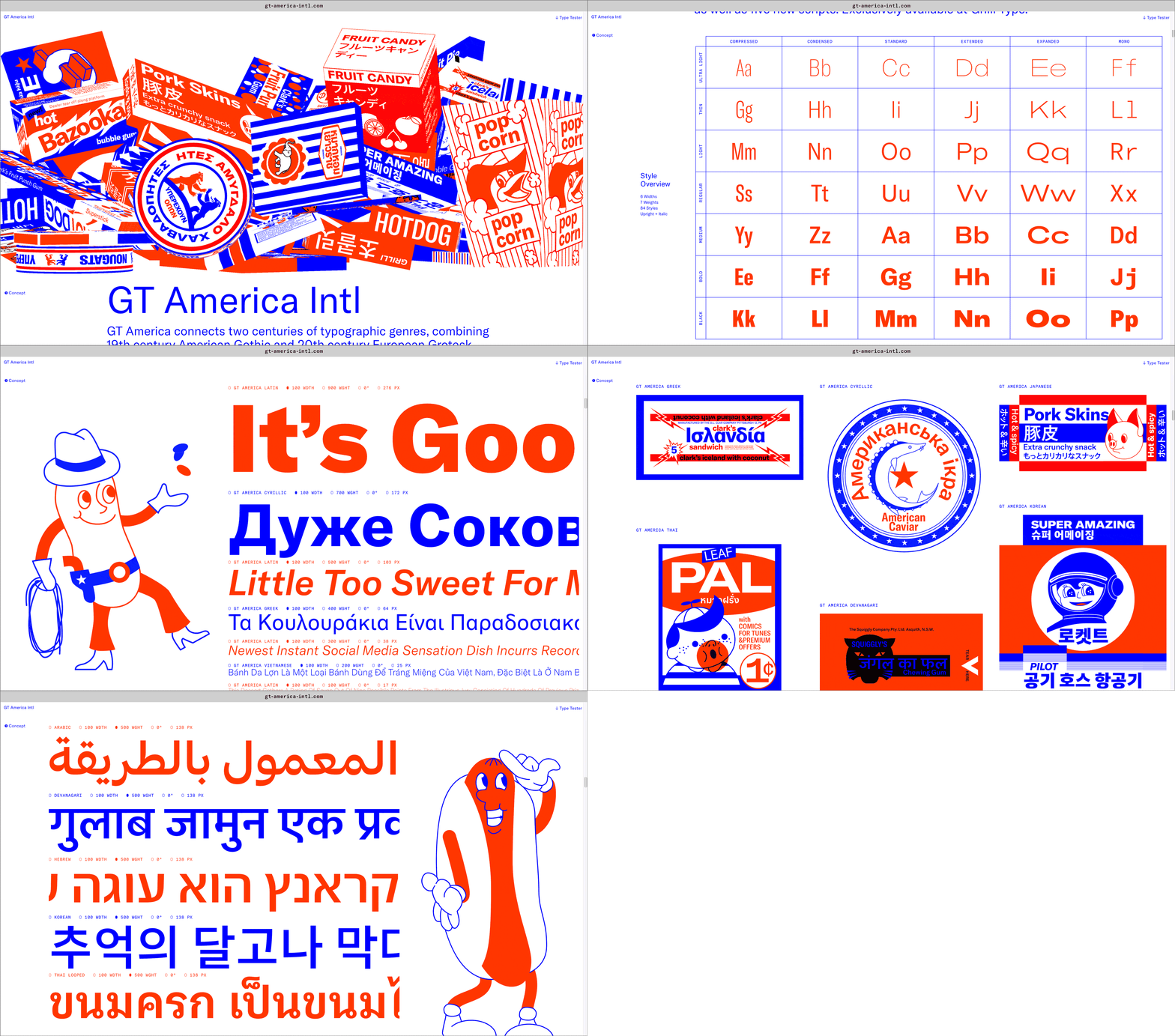
- Visit the GT America minisite to discover more about the typeface family’s history and design concept.
GT America in use