GT Era
Family overview
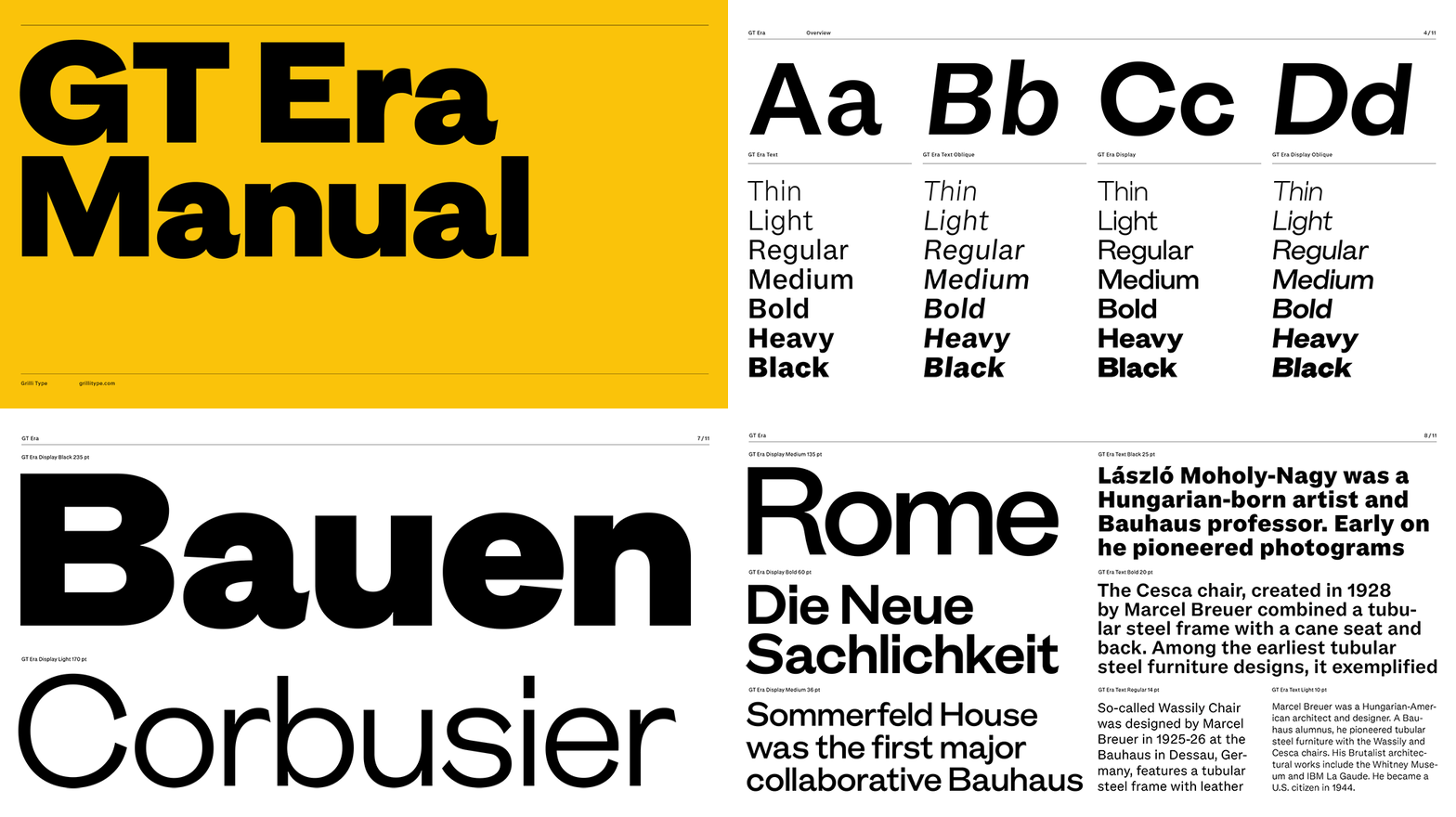
- Display
- Thin Oblique
- Light Oblique
- Regular Oblique
- Medium Oblique
- Bold Oblique
- Heavy Oblique
- Black Oblique
- Text
- Thin Oblique
- Light Oblique
- Regular Oblique
- Medium Oblique
- Bold Oblique
- Heavy Oblique
- Black Oblique
Subfamilies
- Display ThinThe ethical necessity of the New Architecture can no longer be called in doubt. And the proof of this—if proof were still needed—is that in all countries Youth has been fired with its inspiration.
- Display Thin ObliqueBut the primary advantage of the flat roof is that it renders possible a much freer kind of interior planning.
- Display LightXVI. Der ästhetische Wert eines Kunstwerks ist abhängig vom Grade der Bestimmtheit der ästhetischen Akzente.
- Display Light ObliqueThe stronger the aesthetic experience the more completely will the objective, natural appearance of the object of the experience be annihilated.
- Display RegularThus such skill as it acquired was of that amateurish studio-bred order which is innocent of realities like technical progress and commercial demand.
- Display Regular ObliqueNot the single piece of work, nor the highest individual attainment must be emphasized, but instead the creation of the commonly usable type, development toward “standards”.
- Display MediumThey tested materials for qualities such as color, texture, structure, resistance to wear, flexibility, light refraction and sound absorption.
- Display Medium ObliqueLine Diagram 25: Linear structure of the picture “Little Dream in Red” (1925) by Kandinsky, Wassily.
- Display BoldThey became, for instance, the stimulus for a new typography; they affected photography, advertising, the motion picture, the theater, and have had many repercussions on our whole life today.
- Display Bold ObliqueOur modern system of production is imposed labor, a senseless pursuit, and, in its social aspects, without plan; its motive is to squeeze out profits to the limit. This in most cases is a reversal of its original purpose.
- Display HeavyMeyer favoured measurements and calculations in his presentations to clients, along with the use of off-the-shelf architectural components to reduce costs.
- Display Heavy ObliqueOne should not imagine that these relationships are to be taken literally, and, above all, should not believe that they can determine the compositional idea.
- Display BlackHis style in architecture and consumer goods was to be functional, cheap and consistent with mass production.
- Display Black ObliqueIn addition to being a teacher, Albers was an active abstract painter and theorist, best known for his series Homage to the Square, in which he explored chromatic interactions with nested squares, meticulously recording the colors used.
- Settings
Typeface information
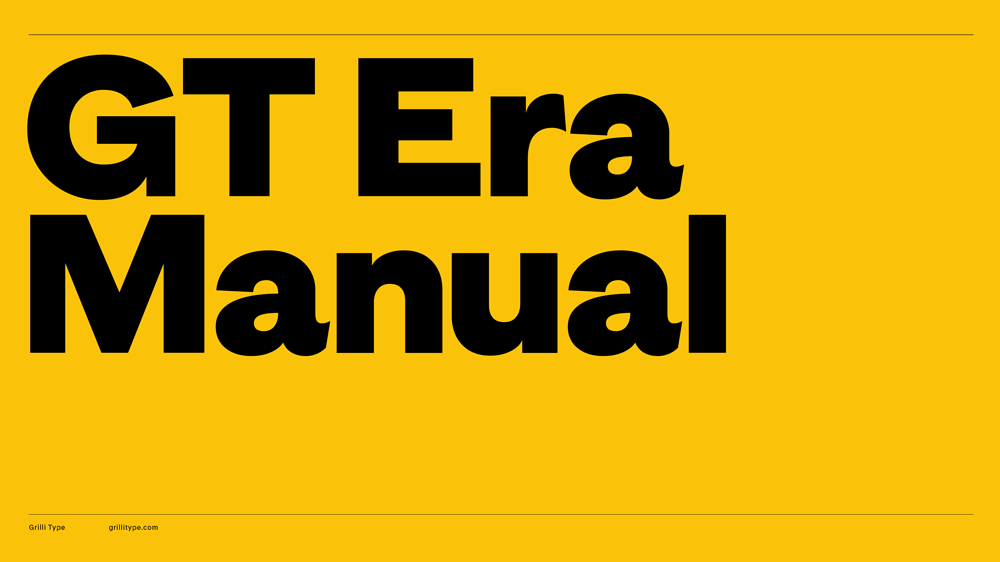
GT Era reimagines the warmth and idiosyncrasies of early grotesk typefaces for our own era. These pre-modernist tools were being pushed to their extremes in the radical designs of the modernist movements—like Bauhaus and De Stijl—of the period. The typeface shuns neutrality and embraces friction, championing recognition over uniformity and flavor over conformity.
- Designed by Thierry Blancpain with Grilli Type
- Released in 2025
- Available in 28 styles
- GT Era is available for customization and language extensions
- Download the free trial fonts
Typeface features
OpenType features enable smart typography. You can use these features in most Desktop applications, on the web, and in your mobile apps. Each typeface contains different features. Below are the most important features included in GT Era’s fonts:
- SS01
- Alternate g
Painting
Typeface Minisite
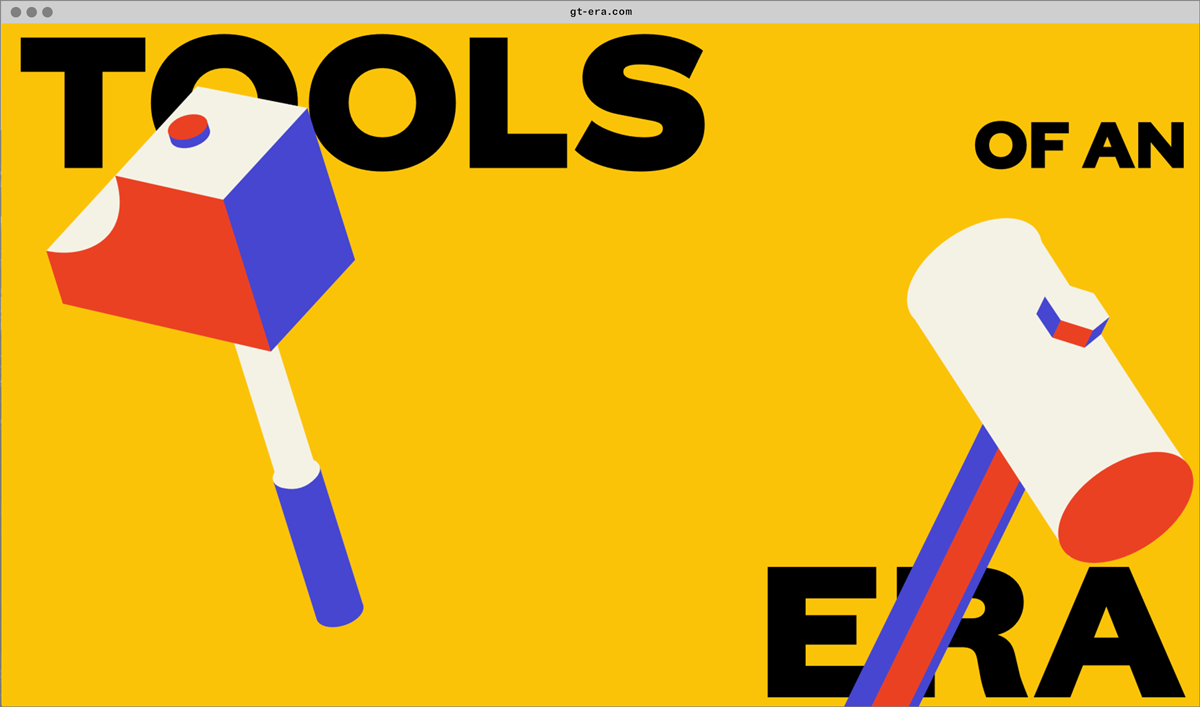
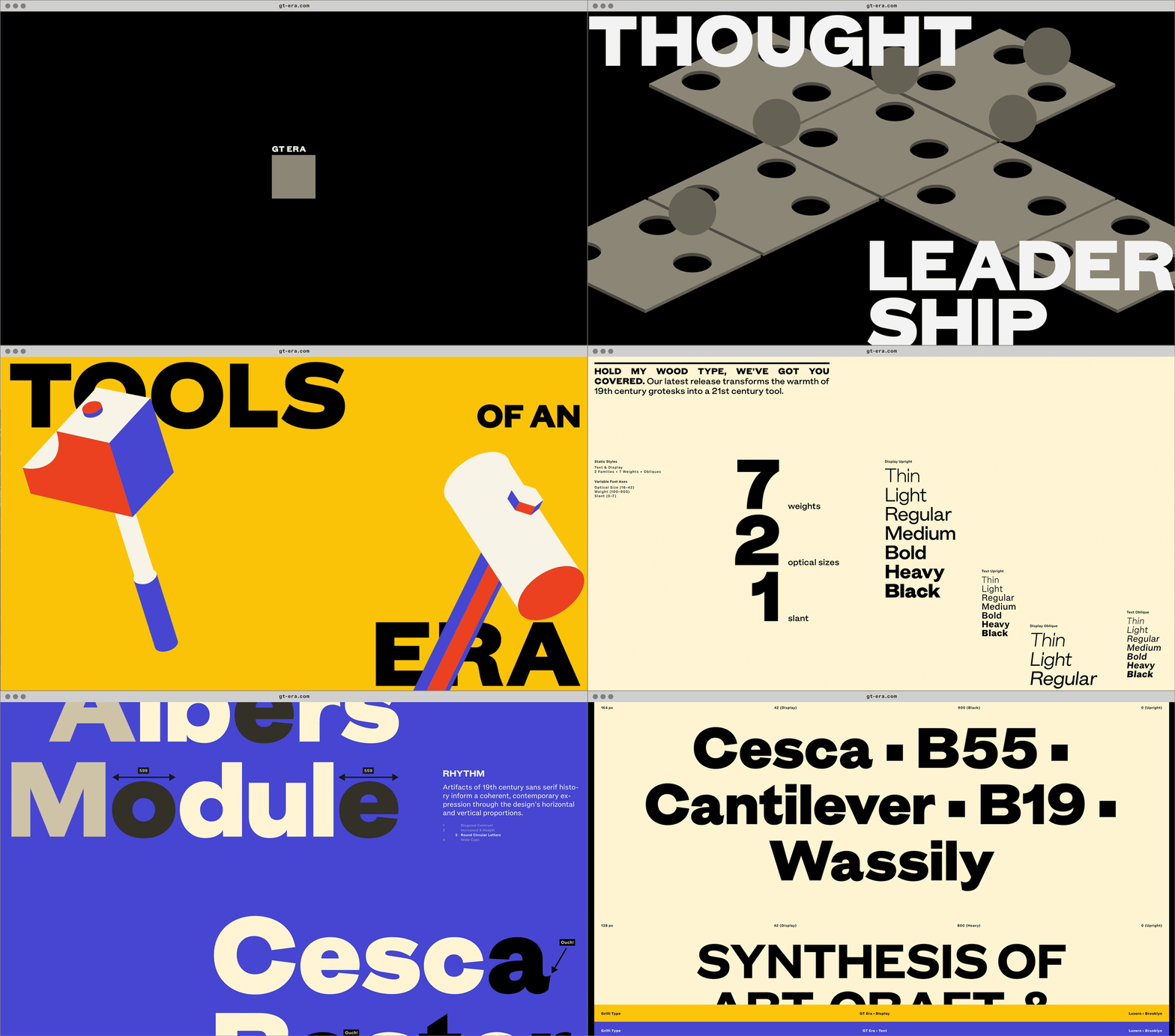
- Visit the GT Era minisite to discover more about the typeface family’s history and design concept.